Ayurveda Initiative for Global Health

Category: Bhagavad Gita

  • Transform your life by applying the timeless teachings of the Bhagavad Gita.

    *Shrimad Bhagavad Gita: The Conclusion of the Teachings*


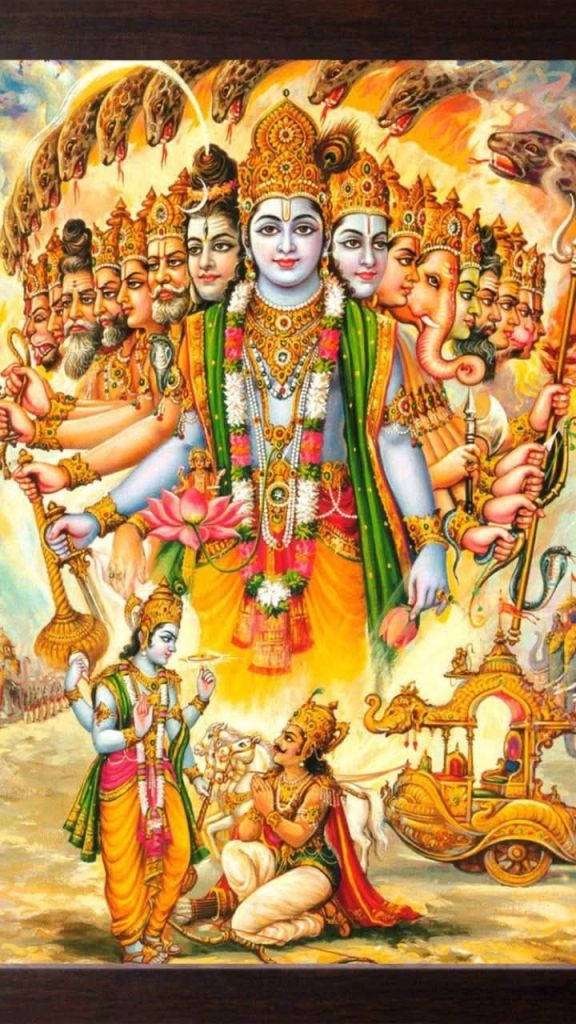
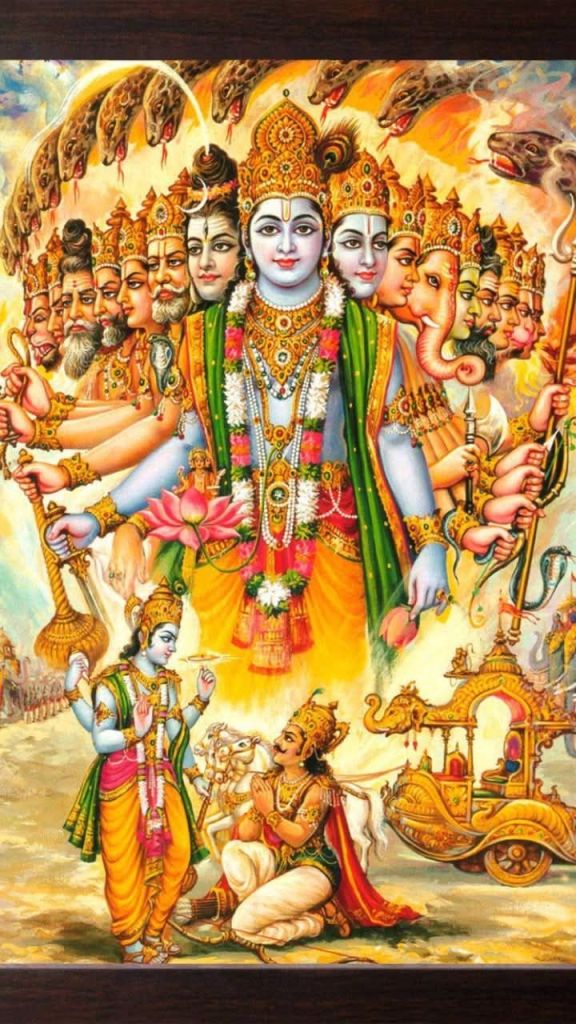
    In Chapter 18, verses 72-78, of the Shrimad Bhagavad Gita, Lord Krishna asks Arjuna if he has understood the teachings. Arjuna confirms that his delusion has been dispelled, and he is ready to execute Krishna’s command. Sanjaya, the narrator, expresses his wonder and joy at hearing the conversation between Krishna and Arjuna.


    The conversation between Krishna and Arjuna can be broken down into several key aspects:

    1. *Krishna’s Query*: Krishna asks Arjuna if he has understood the teachings with a concentrated mind.
    2. *Arjuna’s Response*: Arjuna confirms that his delusion has been dispelled, and he is ready to execute Krishna’s command.
    3. *Sanjaya’s Reflection*: Sanjaya expresses his wonder and joy at hearing the conversation between Krishna and Arjuna.


    This conclusion of the Bhagavad Gita emphasizes the importance of understanding and applying the teachings in one’s life. Arjuna’s transformation from a state of delusion to clarity and determination serves as a model for spiritual growth.

    *Key Points*

    1. Lord Krishna asks Arjuna if he has understood the teachings.
    2. Arjuna confirms that his delusion has been dispelled.
    3. Sanjaya expresses his wonder and joy at hearing the conversation.
    4. The conclusion emphasizes the importance of understanding and applying the teachings.


    “Transform your life by applying the timeless teachings of the Bhagavad Gita.”

    *Source*

    Shrimad Bhagavad Gita (18.72-78)


    The Bhagavad Gita is a sacred Hindu scripture that provides spiritual guidance and wisdom. It is a dialogue between Lord Krishna and Arjuna, and it explores themes such as duty, devotion, and spiritual growth. The Gita emphasizes the importance of selfless action, meditation, and devotion to achieve spiritual liberation.
    Bhagavad Gita
  • Share spiritual knowledge with care, and reap the rewards of devotion.

    *Shrimad Bhagavad Gita: The Importance of Discipleship and Devotion*


    In Chapter 18, verses 67-71, of the Shrimad Bhagavad Gita, Lord Krishna emphasizes the importance of imparting spiritual knowledge only to those who are truly devoted and qualified. He also highlights the rewards of sharing and studying this sacred doctrine.


    Lord Krishna’s words can be broken down into several key aspects:

    1. *Restricted Sharing*: Krishna advises Arjuna to share this profound doctrine only with those who lead an austere life, have devotion to Him, and are devoid of caviling.
    2. *Rewards of Sharing*: Krishna promises that whoever teaches this doctrine to His devotees shall come to Him alone and be dear to Him.
    3. *Rewards of Studying*: Krishna declares that whoever studies this conversation between Him and Arjuna shall be regarded as adoring Him with a sacrifice of knowledge.
    4. *Liberation through Listening*: Krishna assures that even a man who listens to this holy conversation with deep faith and receptivity shall attain liberation and the happy regions open to righteous men.


    Krishna’s words highlight the importance of discipleship and devotion in spiritual growth. He emphasizes that spiritual knowledge should only be shared with those who are truly qualified and devoted, lest it be misused or disrespected.

    *Key Points*

    1. Impart spiritual knowledge only to those who lead an austere life and have devotion to Lord Krishna.
    2. Sharing this doctrine with devotees leads to rewards and closeness to Lord Krishna.
    3. Studying this conversation is regarded as a sacrifice of knowledge and leads to liberation.
    4. Listening to this conversation with faith and receptivity leads to liberation and happiness.


    The moral of this topic is that spiritual knowledge should be shared responsibly and only with those who are truly devoted and qualified.


    “Share spiritual knowledge with care, and reap the rewards of devotion.”

    *Source*

    Shrimad Bhagavad Gita (18.67-71)

    Lord Krishna
  • Surrender to the ultimate refuge, and find peace and liberation.

    *Shrimad Bhagavad Gita: The Ultimate Refuge*


    The Shrimad Bhagavad Gita is a sacred Hindu scripture that provides spiritual guidance and wisdom. In Chapter 18, verses 63-66, Lord Krishna imparts his supreme word, emphasizing the importance of surrendering to Him as the ultimate refuge.


    Lord Krishna’s words can be broken down into several key aspects:

    1. *Reflect and Act*: Krishna advises Arjuna to reflect on the teachings and act according to his own judgment.
    2. *Supreme Word*: Krishna shares his supreme word, which is the profoundest of all spiritual teachings.
    3. *Surrender to Me*: Krishna asks Arjuna to let his mind be engrossed in Him, offer worship, and be resigned to Him.
    4. *Abandon Dependence on Dharmas*: Krishna advises Arjuna to abandon dependence on all human efforts at moral and spiritual upliftment and come to Him as the only refuge.


    Krishna’s words emphasize the importance of surrendering to a higher power and abandoning dependence on human efforts. This surrender is not a sign of weakness but rather a sign of strength, as it requires humility and trust.

    *Key Points*

    1. Reflect on the teachings and act according to your own judgment.
    2. Surrender to Lord Krishna as the ultimate refuge.
    3. Abandon dependence on human efforts at moral and spiritual upliftment.
    4. Let your mind be engrossed in Lord Krishna.


    The moral of this topic is that true refuge and peace can be found by surrendering to a higher power and abandoning dependence on human efforts.


    “Surrender to the ultimate refuge, and find peace and liberation.”

    Lord Krishna