Embracing Detachment: The Ayurveda Path to Inner Peace
Desires are a natural part of the human experience, but when we become overly attached to them, they can lead to suffering and discontent. In this blog, we’ll explore the concept of detachment and how an Ayurveda lifestyle can help you cultivate a sense of inner peace and contentment.
Ayurveda teaches us that attachment to desires can create an imbalance in the mind and body. When we’re overly attached to our desires, we can become consumed by feelings of craving and aversion. Detachment, on the other hand, allows us to approach life with a sense of equanimity and acceptance. By letting go of attachment to desires, we can:
1 Cultivate a sense of inner peace and contentment
2 Reduce stress and anxiety
3 Increase our sense of freedom and flexibility
4 Develop a greater sense of self-awareness and understanding
Frequently Asked Questions and Answers:
Q: How can I cultivate detachment in my daily life?
A: You can cultivate detachment by practicing mindfulness, meditation, and self-reflection. These practices can help you develop a greater sense of awareness and understanding of your thoughts and emotions.
Q: Is it possible to have no desires in life?
A: Wanting to have no desires in life is, in itself, a desire. The goal of detachment is not to eliminate desires entirely, but to approach them with a sense of equanimity and acceptance.
Q: How can an Ayurveda lifestyle help me cultivate detachment?
A: An Ayurveda lifestyle can help you cultivate detachment by promoting balance and harmony in the mind and body. By following an Ayurvedic diet, practicing yoga and meditation, and cultivating self-awareness, you can develop a greater sense of detachment and inner peace.
Q: What are some Ayurvedic practices that can help me cultivate detachment?
A: Ayurvedic practices such as meditation, yoga, and pranayama can help you cultivate detachment by promoting relaxation, reducing stress and anxiety, and increasing self-awareness.
Conclusion:
Cultivating detachment is a powerful way to reduce suffering and increase inner peace. By embracing an Ayurveda lifestyle and practicing mindfulness, meditation, and self-reflection, you can develop a greater sense of detachment and contentment. Remember, detachment is not about eliminating desires entirely, but about approaching them with a sense of equanimity and acceptance.
Tag: spirituality
-
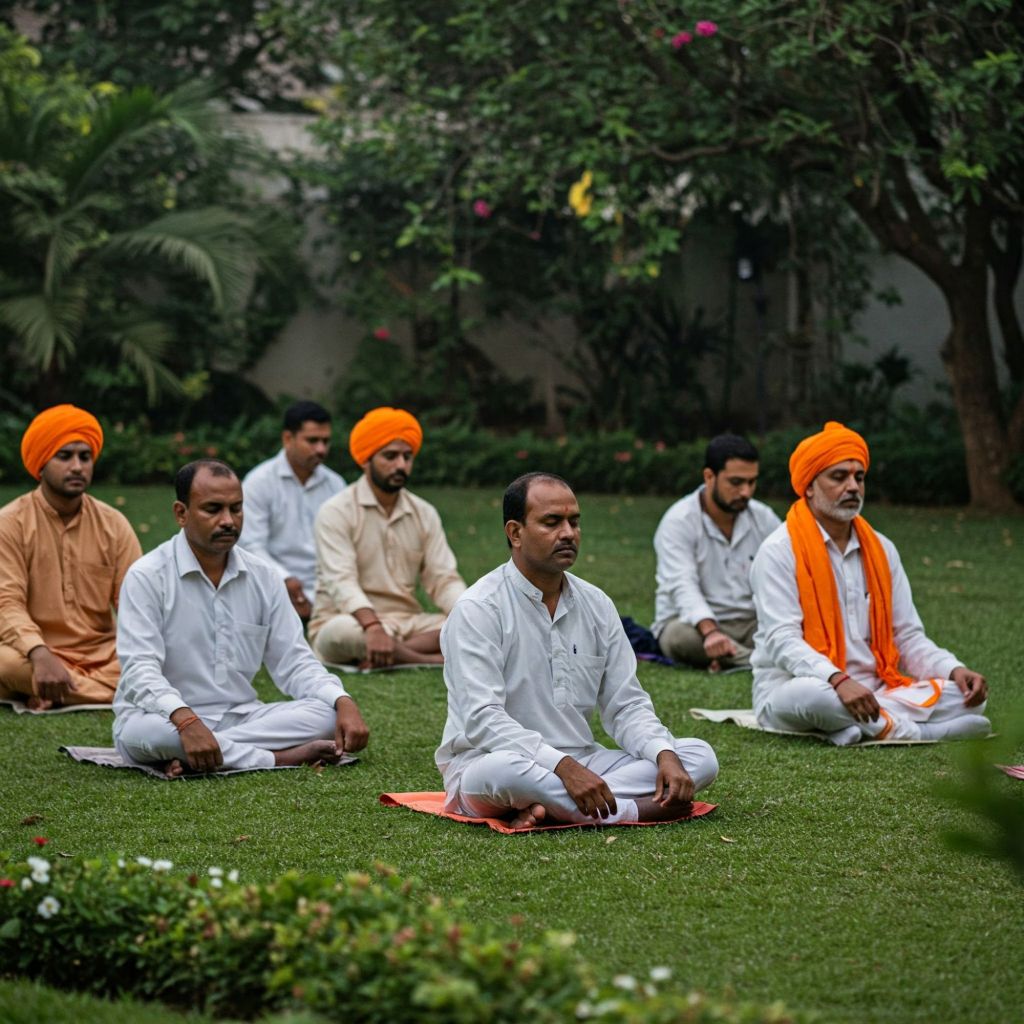
Let go, and find peace.
-

Celebrate life with reverence, joy with sacredness.
Celebrating Life with Sacredness: The Ayurveda Way
Celebrations are an integral part of human life, allowing us to connect with others, honor special occasions, and create lasting memories. However, in today’s fast-paced world, celebrations can often feel superficial and lacking in depth. In this blog, we’ll explore how incorporating sacredness into our celebrations can add more meaning and joy, and how an Ayurveda lifestyle can help us achieve this.
Ayurveda teaches us that everything in life is interconnected and sacred. When we approach celebrations with a sense of reverence and devotion, we can transcend the mundane and connect with something deeper and more meaningful. By incorporating sacred practices into our celebrations, we can:
1 Create a sense of community and connection with others
2 Honor the occasion and the people involved
3 Cultivate gratitude and appreciation for life’s blessings
4 Experience a deeper sense of joy and fulfillment
Frequently Asked Questions and Answers:
Q: How can I incorporate sacredness into my celebrations?
A: You can incorporate sacred practices such as meditation, prayer, or ritual into your celebrations to add depth and meaning.
Q: What are some Ayurvedic practices that can help me cultivate a sense of sacredness?
A: Ayurvedic practices such as pujas (rituals), havans (fire ceremonies), and mantra recitation can help you cultivate a sense of sacredness and connection to the divine.
Q: Can incorporating sacredness into my celebrations really make a difference in my life?
A: Yes, incorporating sacredness into your celebrations can help you cultivate a deeper sense of meaning, connection, and joy in your life.
Q: How can I balance the sacred and the mundane in my celebrations?
A: You can balance the sacred and the mundane in your celebrations by incorporating sacred practices into your daily life and approaching everyday activities with a sense of reverence and devotion.
Conclusion:
Celebrating life with sacredness can add depth, meaning, and joy to our experiences. By incorporating Ayurvedic practices and sacred rituals into our celebrations, we can cultivate a deeper sense of connection to ourselves, others, and the world around us. Remember, every moment is an opportunity to celebrate the sacredness of life. -
Meditate, Realize, Be Free.
The Self is All, All is the Self.
In the depths of existence, I search for the truth,A reality that’s beyond all youth.I find that all is Self, a unity so grand,No differences, no distinctions, in this cosmic land.
No words can describe, no thoughts can define,This reality that’s beyond all space and time.I’m wonderstruck, in awe of this sight,A universe that’s one, in all its light.In this state of wonder, I find my peace,A sense of calm, my soul’s release.I’m free from doubts, from fears and from pain,In the knowledge that all is Self, I’m sane.So let’s meditate, daily, with devotion,To realize this truth, this cosmic emotion.Let’s connect with our Self, our inner guide,And find the peace, the love, that’s deep inside.May we all be inspired, to walk this path,To realize our true nature, our cosmic math.May we find the wonder, the awe, the peace,In the knowledge that all is Self, our soul’s release.The concept of Self is a profound and complex idea that transcendsthe limitations of language and rational understanding.It is a reality that is beyond duality, beyond distinctions, and beyond words.As we ponder the nature of the Self, we are drawn into a realm of wonderand awe, where the boundaries of the ego are dissolved,and the true nature of existence is revealed.Through daily meditation, we can experience this reality firsthand,and gain a deeper understanding of the interconnectedness of all things.By quieting the mind, and focusing on the present moment,we can catch a glimpse of the Self, and experience the peace, joy,and freedom that it brings.Ultimately, the concept of Self is not something to be intellectually understood,but rather something to be directly experienced.As we embark on this journey of self-discovery,we are invited to let go of our preconceptions, andour limited understanding, and instead,to approach the mystery of the Self with an open heart, and a willingness to be wonderstruck.Frequently Asked Questions.
1. What is the concept of Self?The concept of Self refers to the ultimate reality that underlies all existence. It is the essence of everything, beyond all distinctions and differences.2. What is the relationship between the Self and the world?The Self is not separate from the world; it is the world. The distinctions and differences we perceive are illusions.3. How can I experience the Self?The Self can be experienced through meditation, self-inquiry, and letting go of attachments and ego.4. What is the significance of meditation in realizing the Self?Meditation helps to quiet the mind, focus on the present moment, and experience the unity and interconnectedness of all existence.5. How can I cultivate a sense of wonder and awe in my daily life?Cultivate a sense of curiosity, let go of preconceptions, and approach life with an open and receptive mind.6. What is the role of self-inquiry in realizing the Self?Self-inquiry involves questioning one’s assumptions, examining one’s thoughts and emotions, and seeking to understand the nature of the Self.7. How can I balance my daily life with the pursuit of spiritual growth?Prioritize your spiritual practice, set aside time for meditation and self-reflection, and cultivate mindfulness in your daily activities.1. What is the relationship between the Self and the ego?The ego is a limited and conditioned aspect of the Self. Letting go of ego attachments and identifications can help reveal the true nature of the Self.“Meditate, Relax, Renew”
Mission daily meditation series No. 13 -
Meditate, Take Risks, and Live Life to the Fullest.
Feel Alive
Do daily meditation, to calm your mindAnd find the courage, to leave your fears behindExperiencing new things, in life’s grand planMakes us feel alive, and takes us to new lands
Take risks and challenge, the status quoDon’t let fear hold you back, from all you can knowLife’s too short, to play it safe and soundTake the leap of faith, and watch your spirit boundNew experiences await, around every bendNew lessons to learn, and new friends to lendA new perspective, on life’s grand stageA new sense of purpose, and a new turn of the pageSo don’t be afraid, to take the road less traveledTo explore new horizons, and to new dreams unraveledDo daily meditation, to connect with your soulAnd take those risks, to make your heart and spirit wholeEnjoy life’s journey, with all its twists and turnsAnd find the joy, in all your new learnsFor experiencing new things, in life’s grand planMakes us feel alive, and takes us to new lands.महसूस करो ज़िंदगी
दैनिक ध्यान करें, अपने मन को शांत करने के लिएऔर अपने डरों को पीछे छोड़ने के लिए साहस पाएंजीवन की भव्य योजना में नए अनुभव प्राप्त करनाहमें जीवित महसूस कराता है, और हमें नए देशों में ले जाता हैस्थिति को चुनौती दें, और जोखिम उठाएंडर आपको रोके नहीं, जो आप जान सकते हैंजीवन बहुत छोटा है, सुरक्षित और सुनिश्चित खेलने के लिएविश्वास का कदम उठाएं, और अपने आत्मा को बंधन से मुक्त देखेंनए अनुभव हर मोड़ पर इंतजार कर रहे हैंनई सीखने की बातें, और नए दोस्त बनाने के लिएजीवन के भव्य मंच पर एक नई दृष्टिकोणएक नए उद्देश्य की भावना, और एक नए पृष्ठ की शुरुआततो डरने की जरूरत नहीं, कम यात्रा किए गए रास्ते पर चलने के लिएनए क्षितिजों का अन्वेषण करने के लिए, और नए सपनों को प्रकट करने के लिएदैनिक ध्यान करें, अपने आत्मा से जुड़ने के लिएऔर जोखिम उठाएं, अपने दिल और आत्मा को पूरा करने के लिएजीवन की यात्रा का आनंद लें, अपने सभी मोड़ों और मोड़ों के साथऔर अपने नए अनुभवों में खुशी पाएंक्योंकि जीवन की भव्य योजना में नए अनुभव प्राप्त करनाहमें जीवित महसूस कराता है, और हमें नए देशों में ले जाता है।“Meditate, Refresh, Recharge” Daily Meditation Series No 8.
-
Cultivating inner peace and happiness.
Happiness from Within | Mindfulness and meditation for happiness
Spirituality is often misunderstood as a mere philosophical concept or a religious dogma. However, at its core, spirituality is a deeply personal and transformative journey that seeks to awaken the human spirit to its true nature. The goal of spirituality, as the ancient wisdom goes, is to bring such happiness, which nobody can take away from you.
This profound statement echoes the words of the Dalai Lama, “Happiness is not something ready-made. It comes from your own actions.” Spirituality is not about seeking external sources of happiness, but rather about cultivating a deep sense of inner peace, joy, and fulfillment that is not dependent on external circumstances.

So, how does spirituality achieve this remarkable feat? The answer lies in its ability to connect us with our true selves and the world around us. As the spiritual teacher, Eckhart Tolle, so eloquently puts it, “The primary cause of unhappiness is never the situation but rather the thoughts about it. Be aware of your thoughts, but don’t be your thoughts. Watch your thoughts, but don’t be watched by your thoughts.”
Spirituality invites us to embark on a journey of self-discovery, to explore the depths of our own consciousness, and to awaken to the present moment. Through practices such as meditation, mindfulness, and prayer, we can cultivate a greater sense of awareness, clarity, and inner peace.
For example, the practice of mindfulness meditation has been shown to decrease stress, anxiety, and depression, while increasing feelings of happiness, compassion, and empathy. By focusing on the present moment, we can begin to let go of our attachment to negative thoughts, emotions, and experiences, and instead, cultivate a sense of gratitude, wonder, and awe.
Moreover, spirituality encourages us to connect with something greater than ourselves, whether that be a higher power, nature, or a sense of universal consciousness. This sense of connection can bring a profound sense of meaning, purpose, and belonging to our lives.
As the poet, Rumi, so beautifully expresses, “You are not a drop in the ocean. You are the entire ocean in a drop.” Spirituality reminds us that we are not separate, isolated individuals, but rather, we are interconnected, interdependent, and part of a larger web of life.
The goal of spirituality is not to provide a temporary escape from the challenges of life, but rather, to offer a profound and lasting transformation of the human spirit. By cultivating a deeper sense of inner peace, joy, and fulfillment, we can unlock a happiness that nobody can take away from us.
As the spiritual teacher, Ram Dass, so wisely puts it, “The spiritual journey is not about finding answers; it’s about being present in the questions.” May we embark on this journey with an open heart, a curious mind, and a willingness to discover the enduring power of spirituality.
Frequently Asked Questions (FAQs) on spirituality and happiness:
1. Q: What is spirituality?
A: Spirituality is a personal journey of self-discovery, growth, and connection with something greater than oneself.
2. Q: How does spirituality relate to happiness?
A: Spirituality can bring a deeper sense of happiness and fulfillment by connecting us with our inner selves and something greater.
3 Q: How can I cultivate spirituality in my life?
A: You can cultivate spirituality through practices like meditation, mindfulness, prayer, and connecting with nature.
4 Q: What are some simple spiritual practices I can start with?
A: Start with simple practices like taking a few deep breaths, noticing your thoughts and emotions, or taking a short walk in nature.
5 Q: Can spirituality guarantee happiness?
A: Spirituality can’t guarantee happiness, but it can help you develop a deeper sense of fulfillment and inner peace.
6 Q: How does spirituality help with difficult emotions like sadness and anger?
A: Spirituality can help you develop a greater sense of self-awareness, allowing you to better manage difficult emotions and respond to challenging situations.
7 Q: Is spirituality the same as religion?
A: No, spirituality is a broader concept that encompasses various beliefs, practices, and traditions, while religion is a specific set of beliefs and practices.
8 Q: Do I need to be religious to be spiritual?
A: No, spirituality is a personal journey that can be practiced by anyone, regardless of their religious beliefs or background.
9 Q: How do I get started with spirituality?
A: Start by exploring different spiritual practices and traditions, and find what resonates with you.
10 Q: What are some recommended resources for learning more about spirituality?
A: Explore books, articles, and online courses on spirituality, and seek out guidance from spiritual teachers or mentors.
-
Disclaimer
The information at any place in this website is just an informative basis as well as pure intention to create Awareness about Ayurveda , Yoga and Meditation to encourage people to adopt Ayurveda , Yoga and Meditation in their day to day lifestyle for Natural health. All the content is purely educational in nature and should not be considered medical advice. Please use the content only consultation with appropriate certified Doctor or medical or healthcare professional. This site contains External Links to third party websites ,These links are being provided as a convenience and for informational purposes only; they do not constitute an endorsement or an approval and no responsibility for the accuracy, legality or content of the external site or for that of subsequent links. Contact the external site for answers to questions regarding its content.


 Ayurveda Initiative for Global Health